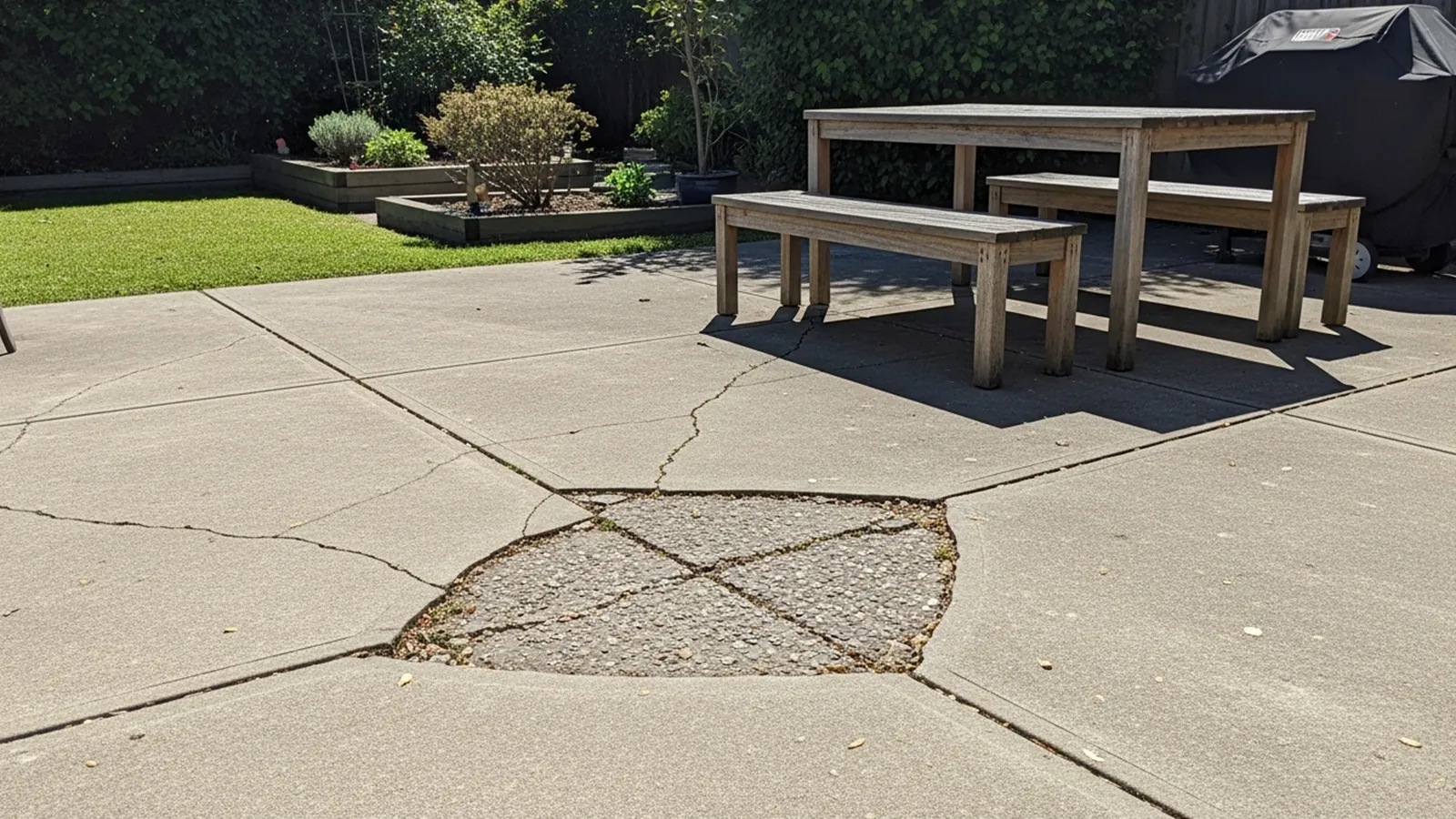
Patio cracks usually raise three immediate questions: is this normal, is it dangerous, and does it mean the patio is failing. The presence of a crack alone does not answer any of those questions. What matters is how the crack behaves over time and what caused it.
Some cracks form once and remain stable for years. Others continue to widen, shift, or spread, which usually points to an underlying problem. Knowing which category your patio falls into determines whether monitoring is enough or whether action is needed.
Most patios do not fail suddenly. They show early warning signs long before safety or usability is affected, and those signs are often visible if you know where to look.
The Most Common Reasons Patios Crack
Patio cracking almost always comes down to stress the surface cannot absorb. The most frequent causes include:
-
Soil movement caused by expansion, contraction, or settling beneath the slab.
-
Installation issues, such as poor base preparation or missing control joints.
-
Moisture and freeze-thaw cycles that force cracks to widen from the inside.
-
Root pressure from nearby trees or large plants.
-
Excessive or concentrated weight, including fire pits, planters, or vehicles.
Cracking rarely has a single cause. In most cases, two or more of these factors work together over time.
How Natural Ground Movement Affects Patio Surfaces
Soil beneath a patio constantly reacts to moisture changes. When soil gets wet, it expands, and when it dries, it contracts. Rigid materials like concrete and stone cannot flex with this movement, so stress builds until it releases as cracking.
Clay-heavy soils tend to swell and shrink dramatically, pushing slabs upward during wet periods and pulling support away during dry ones. Sandy or loose soils usually settle unevenly, leaving unsupported areas that force the slab to bridge gaps. In both cases, the crack is a symptom of movement below the surface, not a surface defect.
The Role of Installation Quality in Crack Formation
Many patio cracks begin at installation, even if they appear much later. A patio needs uniform excavation, proper compaction, and a stable base to distribute loads evenly. When these steps are rushed or skipped, stress concentrates in weak zones.
Concrete also shrinks as it cures, which is why control joints are critical. When joints are missing or poorly spaced, the slab creates its own cracks, often across walkways or seating areas.
Weather, Roots, and Everyday Stress
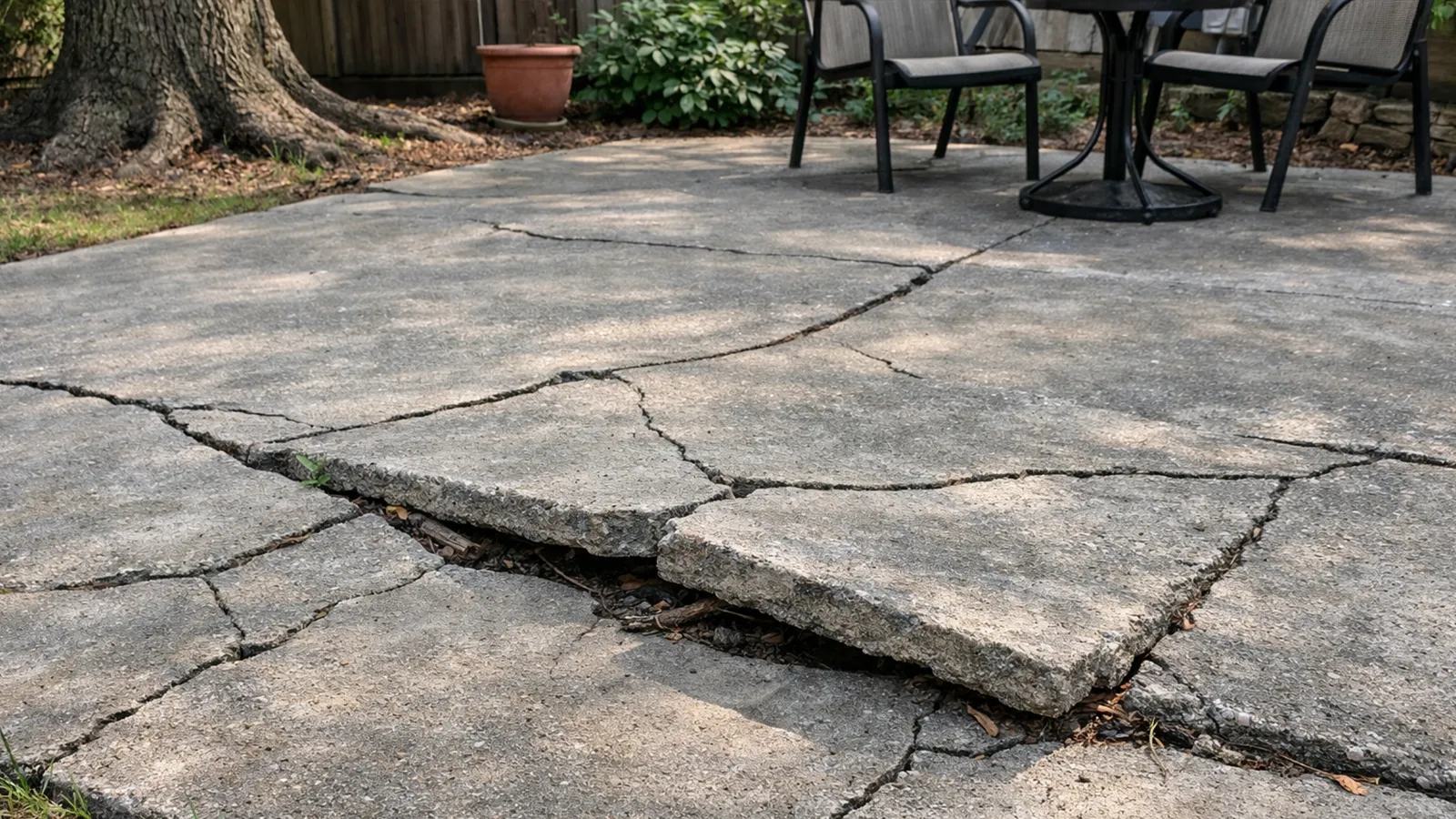
Weather and landscaping often accelerate existing weaknesses. Moisture entering small cracks expands during freezing temperatures, gradually forcing cracks wider. Tree roots apply slow but persistent pressure that can lift sections of the patio over time.
Everyday use also matters. Patios are built for foot traffic, not concentrated heavy loads. Fire pits, hot tubs, and occasional vehicle weight can exceed what the slab was designed to support, especially near edges.
Aging Materials and Normal Wear Over Time
All patio materials lose resilience with age. Concrete becomes more brittle, and surface sealers wear away from sun, rain, and foot traffic. Once protection weakens, moisture enters more easily and cracking accelerates.
Age-related cracks often remain manageable if they are stable and moisture is controlled. This overview from PatioAnswers explains how homeowners can tell the difference between normal patio aging and cracks that need closer attention.
Identifying Hairline Cracks Versus Structural Damage
Not every crack means the patio is failing, but some cracks deserve more attention than others. The most useful first distinction is whether a crack is cosmetic or structural, because each behaves very differently over time.
Hairline cracks are thin, shallow, and usually consistent in width. They often form as concrete cures and releases moisture, and many of them stop changing once the slab finishes adjusting. Structural cracks, by contrast, reflect ongoing stress and rarely stay the same for long.
Cracks are more likely to be structural when you notice:
-
Gradual widening instead of staying the same size.
-
Rough, irregular edges rather than clean, narrow lines.
-
Changes in direction or branching over time.
-
Any height difference between the two sides of the crack.
The key signal is movement. A stable crack is often manageable, while a moving crack usually points to pressure that has not been resolved.
How Water Drainage Problems Accelerate Cracking
Water is one of the most common hidden drivers of patio cracking. When water repeatedly collects near or beneath a patio, it weakens the supporting soil and increases pressure against the slab. Over time, even small drainage issues can turn minor cracks into structural problems.
Poor slope is a frequent cause. A patio that does not direct water away allows moisture to linger, keeping soil saturated longer than it should be. Downspouts that discharge too close to the patio amplify this effect by repeatedly flooding the same area during storms.
Warning signs drainage is contributing include:
-
Cracks that worsen after heavy rain or snowmelt.
-
Dark or damp patches that dry more slowly than surrounding areas.
-
Fine soil or sand washing out along edges or joints.
Because drainage damage compounds gradually, identifying it early can prevent much larger repairs later.
When Cracks Become a Safety or Usability Concern
Cracks cross from cosmetic to problematic when they interfere with how the patio is used. Uneven surfaces increase the risk of trips and falls, especially for children, older adults, and pets that may not easily detect subtle height changes. As cracks widen, edges can crumble and make footing less predictable.
Wide cracks also trap debris and moisture. This encourages weed growth and freeze-thaw expansion, which accelerates deterioration around the damaged area. Over time, the patio becomes harder to walk on, furnish, and maintain.
Cracks should be treated as usability issues when they:
-
Interrupt walking paths or seating areas.
-
Cause furniture to wobble or sit unevenly.
-
Catch toes, wheels, or furniture legs.
At this stage, monitoring alone is usually not enough.
Repair Options Based on Crack Type and Severity
Effective repair depends on matching the solution to the cause, not just the appearance. Hairline cracks can often be sealed to limit moisture intrusion and slow further deterioration. These repairs are preventive rather than structural and work best when movement has stopped.
Moderate cracks may justify resurfacing to restore a smoother, more uniform surface. This approach improves appearance and usability but does not correct underlying soil or drainage issues. If movement continues below the slab, cracks often reappear through the new surface.
More severe cracking tied to soil failure, root pressure, or chronic drainage problems requires a broader view. In these cases, decisions focus on long-term reliability rather than short-term cosmetic improvement.
Preventive Measures That Reduce Future Cracking
Preventing future cracking is largely about reducing stress before damage accumulates. Managing water flow is one of the most effective steps, including keeping downspouts clear and ensuring surface grading directs runoff away from the patio. Stable moisture levels help preserve soil integrity.
Surface protection also matters. Periodic sealing reduces water penetration and slows UV-related breakdown of concrete and stone. While sealers cannot prevent all cracking, they significantly reduce how quickly small cracks worsen.
Other practical prevention factors include:
-
Avoiding heavy loads near slab edges.
-
Watching landscaping changes that alter soil moisture.
-
Using protective pads under heavy furniture.
These steps reduce risk rather than eliminate it, but they meaningfully extend patio life.
Knowing When Professional Evaluation Is Necessary
Some cracking patterns go beyond what visual inspection can reliably assess. Rapid expansion, recurring cracks after repairs, or visible vertical displacement often indicate deeper structural issues. In these cases, professional evaluation helps determine whether soil stabilization, drainage correction, or reconstruction is required.
Professionals look beyond the surface to assess base condition, load distribution, and moisture behavior. Their recommendations typically focus on addressing root causes instead of repeatedly treating symptoms, which reduces long-term cost and disruption.
Understanding when expert input is needed sets the stage for long-term planning. The next step is examining how different patio materials age and how that affects repair versus replacement decisions.
Lifespan Expectations for Different Patio Materials 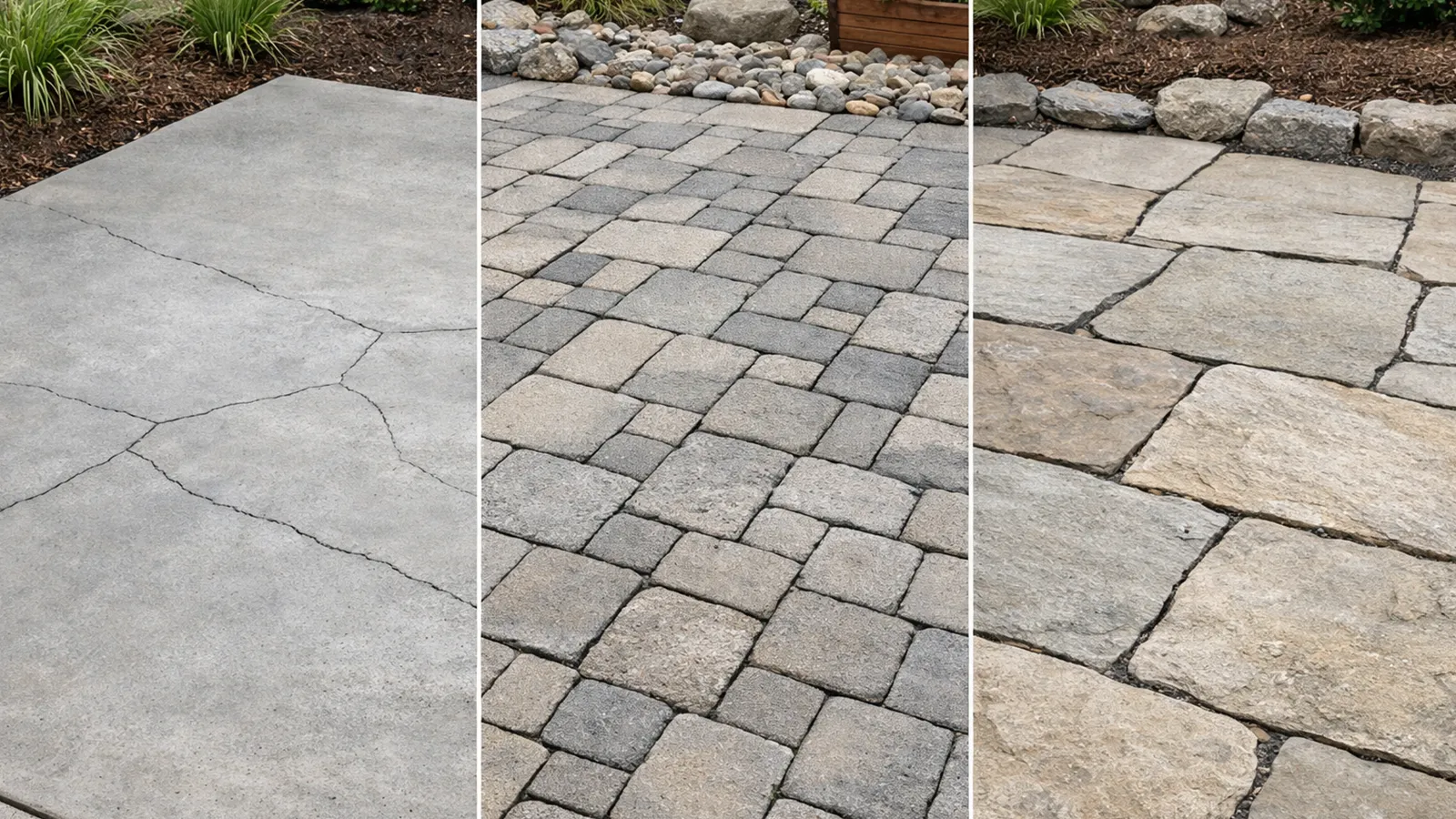
Patio lifespan depends less on age and more on whether the surface has reached a stable condition. Concrete patios are commonly expected to last 25–30 years, but that estimate assumes good drainage, stable soil, and basic maintenance. A cracked patio can remain structurally usable for many years if the cracking has stopped progressing.
Paver patios age differently because their jointed design allows controlled movement. Individual pavers may crack or settle without affecting the entire surface, which often extends functional lifespan. When joint sand and base layers are neglected, however, movement can spread and reduce long-term usability.
Natural stone patios typically offer excellent material durability but low tolerance for installation flaws. In practice, stone patio lifespan is usually limited by bedding layers and joints rather than the stone itself.
How Crack Patterns Reveal Underlying Problems
Crack patterns are often more informative than crack size alone. Straight cracks that align with control joints usually indicate normal concrete shrinkage and tend to stabilize early. These are generally predictable and easier to manage.
Irregular or branching cracks suggest uneven stress beneath the surface. This pattern often points to soil movement, inconsistent compaction, or prolonged moisture imbalance. When cracks form networks instead of single lines, the issue is rarely cosmetic.
Vertical displacement across a crack is the clearest warning sign. When one side sits higher than the other, it indicates active forces such as soil expansion, erosion, or root pressure that are still at work.
Seasonal Monitoring and What Changes Matter Most
Cracks should be evaluated over time, not judged from a single observation. Seasonal temperature and moisture changes naturally cause small expansion and contraction, especially in freeze-thaw climates. Minor seasonal movement alone does not indicate failure.
What matters is trend rather than fluctuation. Cracks that grow wider, longer, or deeper from one season to the next suggest progressive stress. Sudden changes after heavy rain, snowmelt, or drought often point to drainage or soil saturation problems.
Useful monitoring focuses on:
-
Change in width rather than absolute size.
-
New branching or shifts in direction.
-
Development of height differences along existing cracks.
Tracking these signals over several months provides clearer guidance than reacting to appearance alone.
Cost Implications of Delayed Repairs
Delaying crack repair often increases total cost, even when damage initially appears minor. Small cracks that could be sealed inexpensively may widen enough to require resurfacing or partial replacement. Water intrusion during this delay accelerates internal deterioration that remains hidden.
Structural issues are especially costly when ignored. Soil movement, erosion, and root pressure do not resolve on their own, and the longer they persist, the more extensive corrective work becomes. What begins as a surface concern can eventually require full slab replacement.
Early intervention reframes repair as prevention rather than cosmetic improvement.
Planning Long-Term Maintenance Strategies
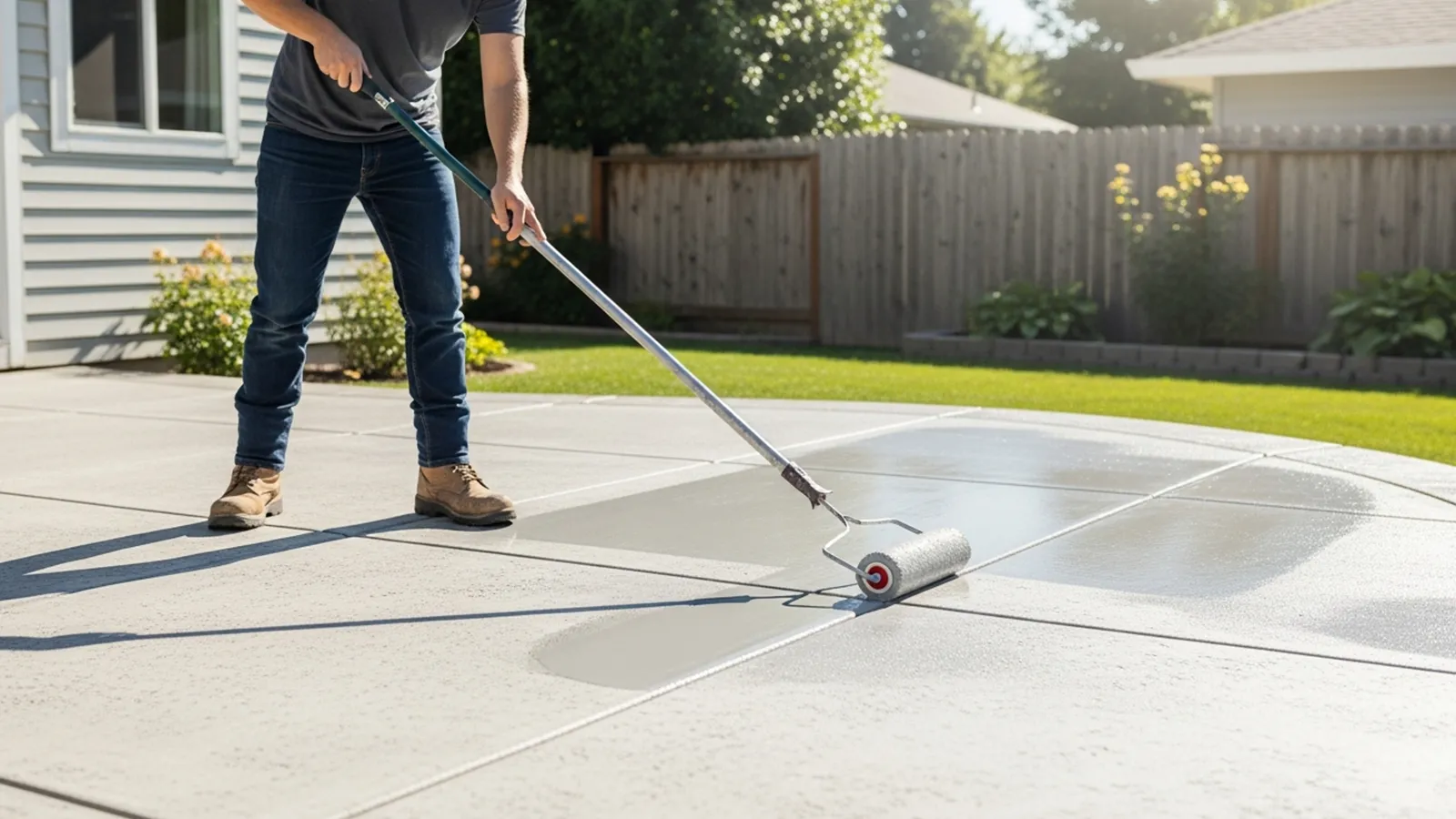
Long-term maintenance reduces both the frequency and severity of patio cracking. Periodic sealing limits moisture penetration and slows freeze-thaw and UV-related damage. While sealers cannot prevent all cracks, they meaningfully reduce how quickly small defects worsen.
Drainage checks should be part of routine upkeep, especially after landscaping or roof drainage changes. Ensuring water consistently flows away from the patio preserves soil stability beneath the slab.
Maintenance practices that support longevity include:
-
Resealing at recommended intervals.
-
Keeping downspouts and drainage paths clear.
-
Avoiding prolonged moisture pooling near slab edges.
Making Repair or Replacement Decisions with Confidence
Deciding between repair and replacement comes down to weighing how the patio is behaving now against what it is likely to do next. Repairs make sense when cracks are stable, limited in scope, and clearly disconnected from ongoing movement below the surface. In those situations, sealing or resurfacing can restore usability and slow further deterioration for a meaningful period of time.
Replacement becomes the more reasonable path when cracking is widespread, uneven, or keeps returning despite previous fixes. Recurring problems usually point to underlying soil, drainage, or structural issues that surface-level treatments cannot solve. At that point, replacement is less about aesthetics and more about choosing a solution that stops the cycle of temporary repairs and provides predictable long-term performance.
Technical Planning Framework: https://www.concrete.org/topicsinconcrete/topicdetail/cracking